Removing the friction that stops 7 in 10 donors
Good Deeds is a mobile app that helps people give to nearby causes without the usual friction of finding where to go, how it works, and who to trust.
Context
Good Deeds is a self-initiated product concept I designed in 2025, taken from research all the way to a working prototype. The research made one thing clear: people want to give, but the path to giving is unclear and hard to trust.
Design response
A mobile concept that turns donating into a clear, local flow, addressing the 70% of people who didn't know where or how to give while treating trust as an open product challenge.
My role
Product Designer and Brand, working solo across research, product structure, interface design, prototyping, and brand.
Highlights
- Two ways to discover nearby drives: list and map
- A guided “Donate now” flow that answers the “how”
- Categories driven by real data: food and clothing first
- A clear next step for trust: verification and transparency
The problem
People wanted to donate. The path was unclear.
Good Deeds started with a problem most people only notice when they try to help: finding a nearby place that needs what they have, understanding how to donate, and feeling confident about who will receive it.
I ran a survey with 27 participants, most aged 20 to 29 and based in a single region of Brazil. The sample was limited, but it exposed a consistent gap between willingness and action.
- 85% had already donated within the past three years, so intent was never the issue.
- 70% didn't know where or how to donate.
- 48% didn't trust the organizations involved.
- Food (78%) and clothing (74%) were the items people most wanted to give.
People needed two things before acting: a clear next step and confidence that the destination or campaign was legitimate. That reframed the challenge from encouraging generosity to reducing uncertainty.
“Intent was never the problem. The friction was in the execution.”
The insight that redirected the design
The solution
A clear path from “I want to help” to “it's done”
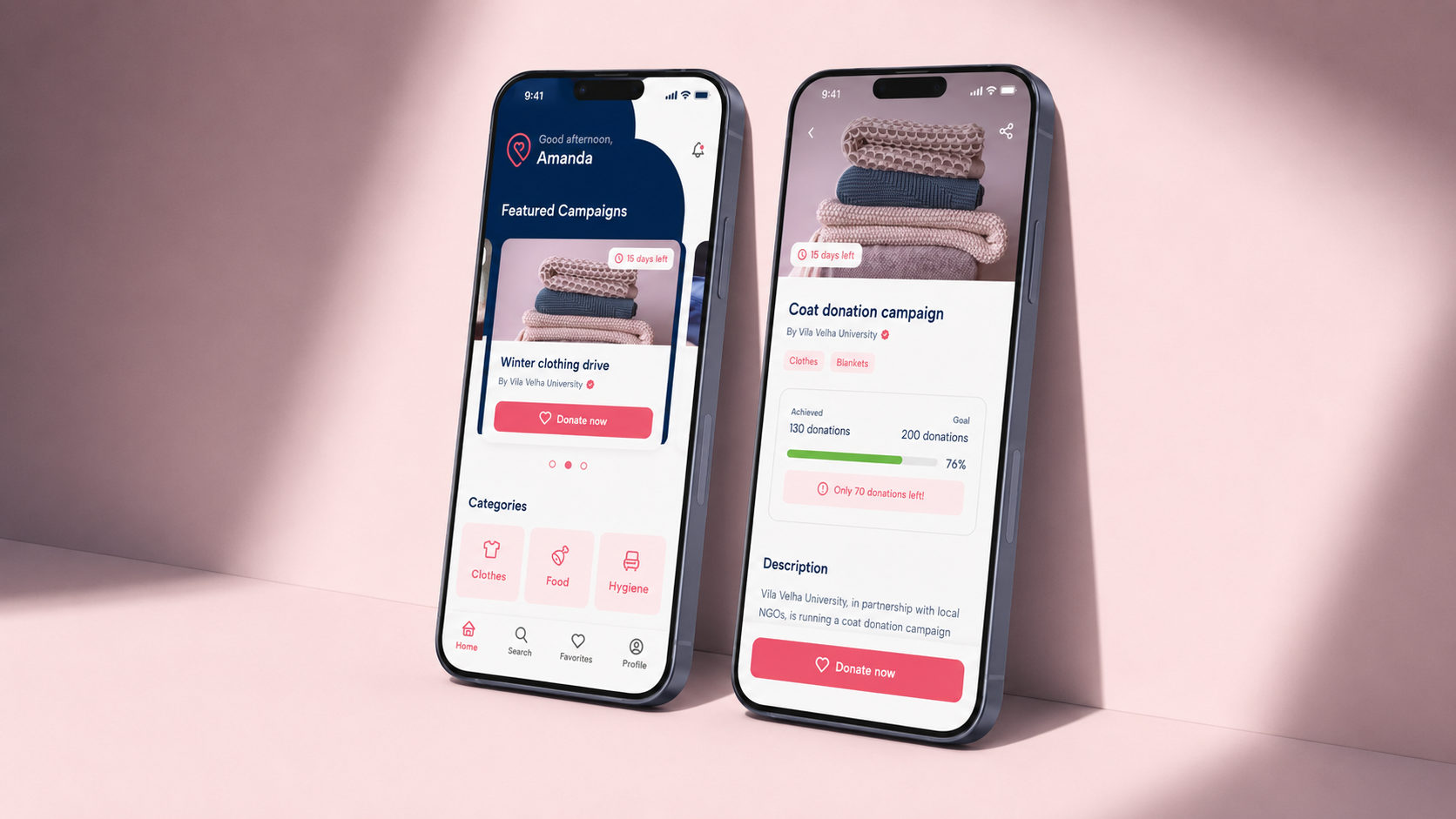
Good Deeds turns donating into something quick and legible, starting with the categories people most want to give: food and clothing. The flow answers the two questions the research surfaced out loud. Where can I give near me, and how exactly does it work?
Food and clothing lead the experience because they were the categories people most wanted to donate, at 78% and 74%.
Finding a place
Two ways to find a place to give
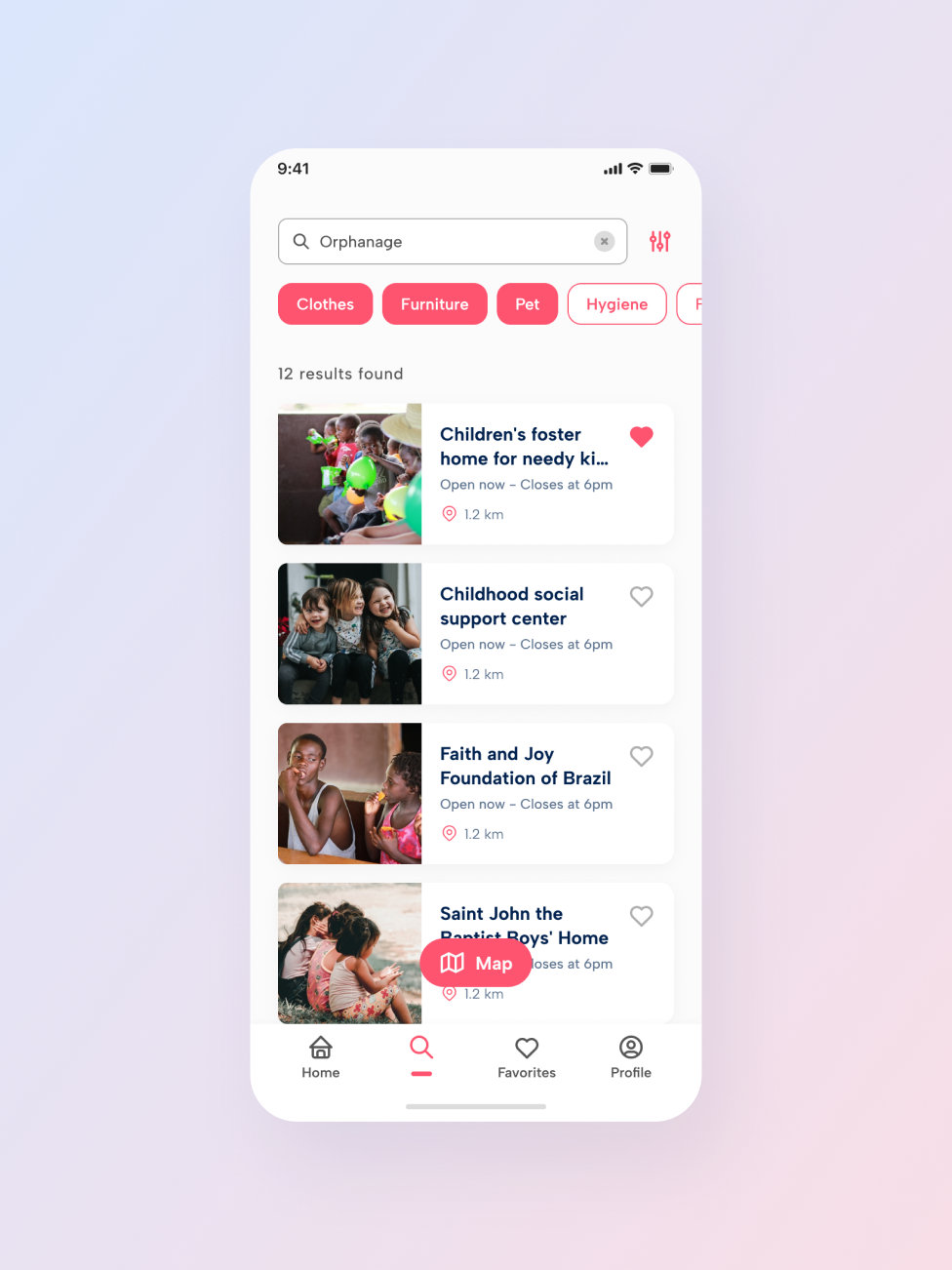
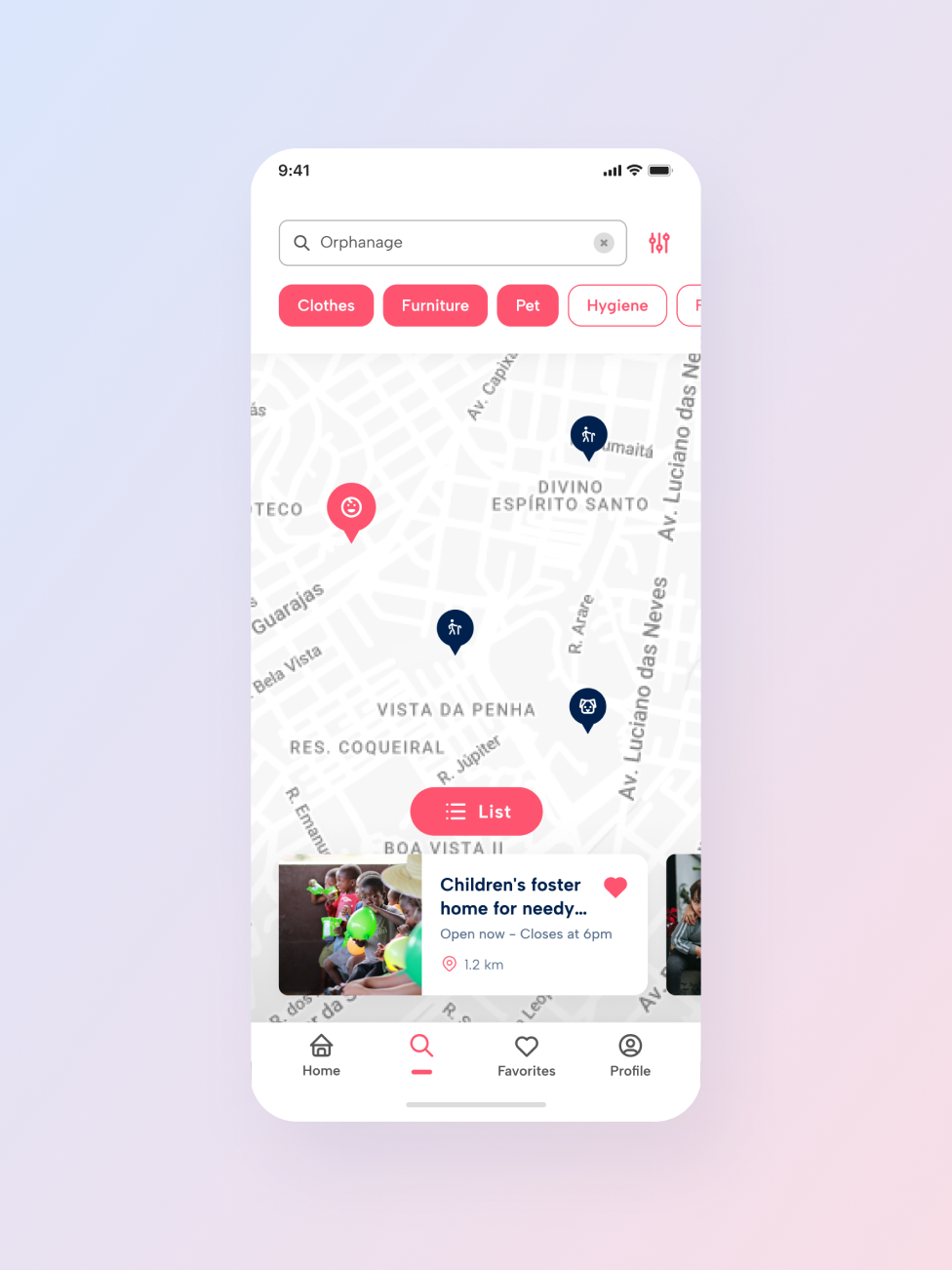
The home screen opens onto nearby drives. From there, people browse the same donation points as a list or on a map, because “what's close to me?” is sometimes a question of distance and sometimes a question of orientation.
Offering both views supports two ways of understanding “near me”: scanning options quickly or seeing their physical location.
Understanding how
A guided “Donate now” that answers the question out loud
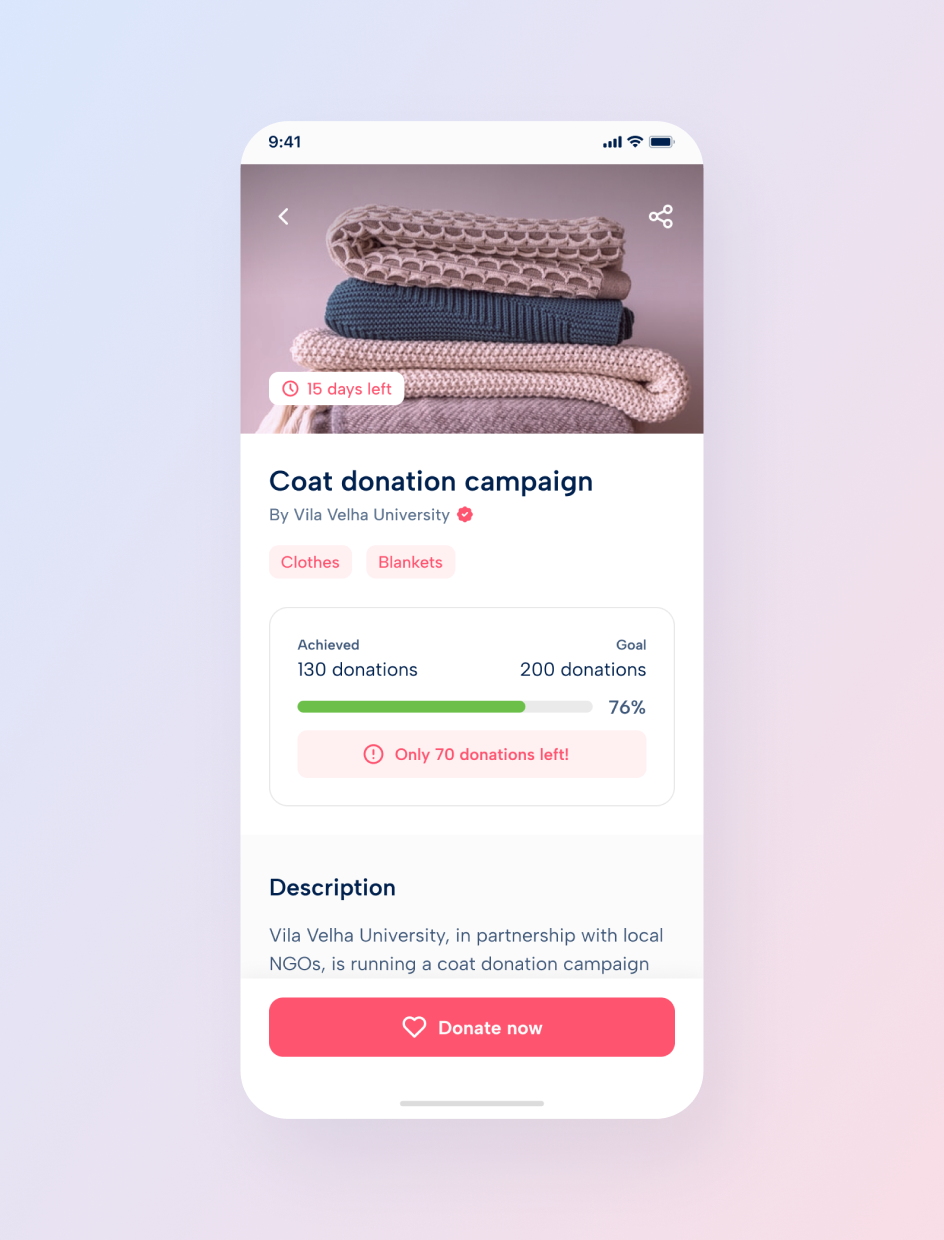
On a drive's detail screen, people choose their path. They can head straight to a collection point, or tap Donate now to be walked through the next steps: what's needed, how to hand it over, and answers to the doubts that usually stop people before they start.
Naming the “how” explicitly is the whole point. It's the exact friction 70% of people described.
Brand
A symbol that connects place and care
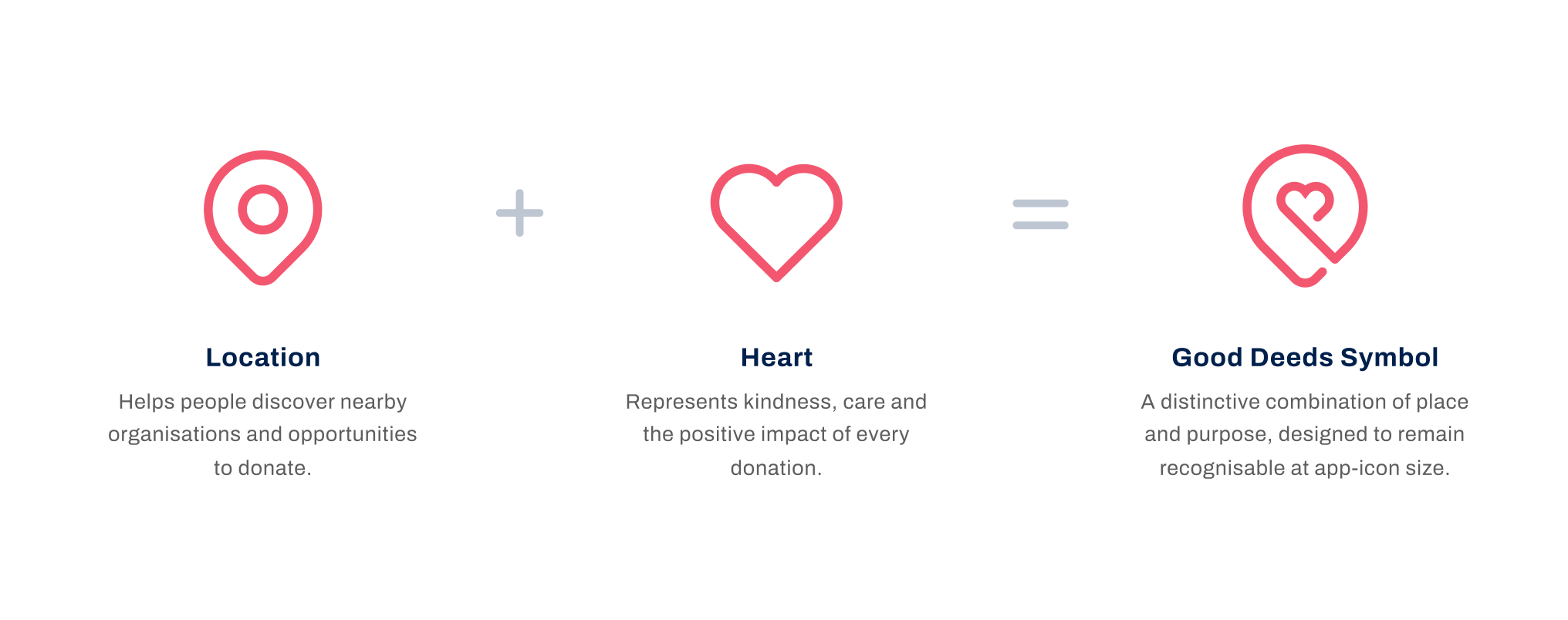
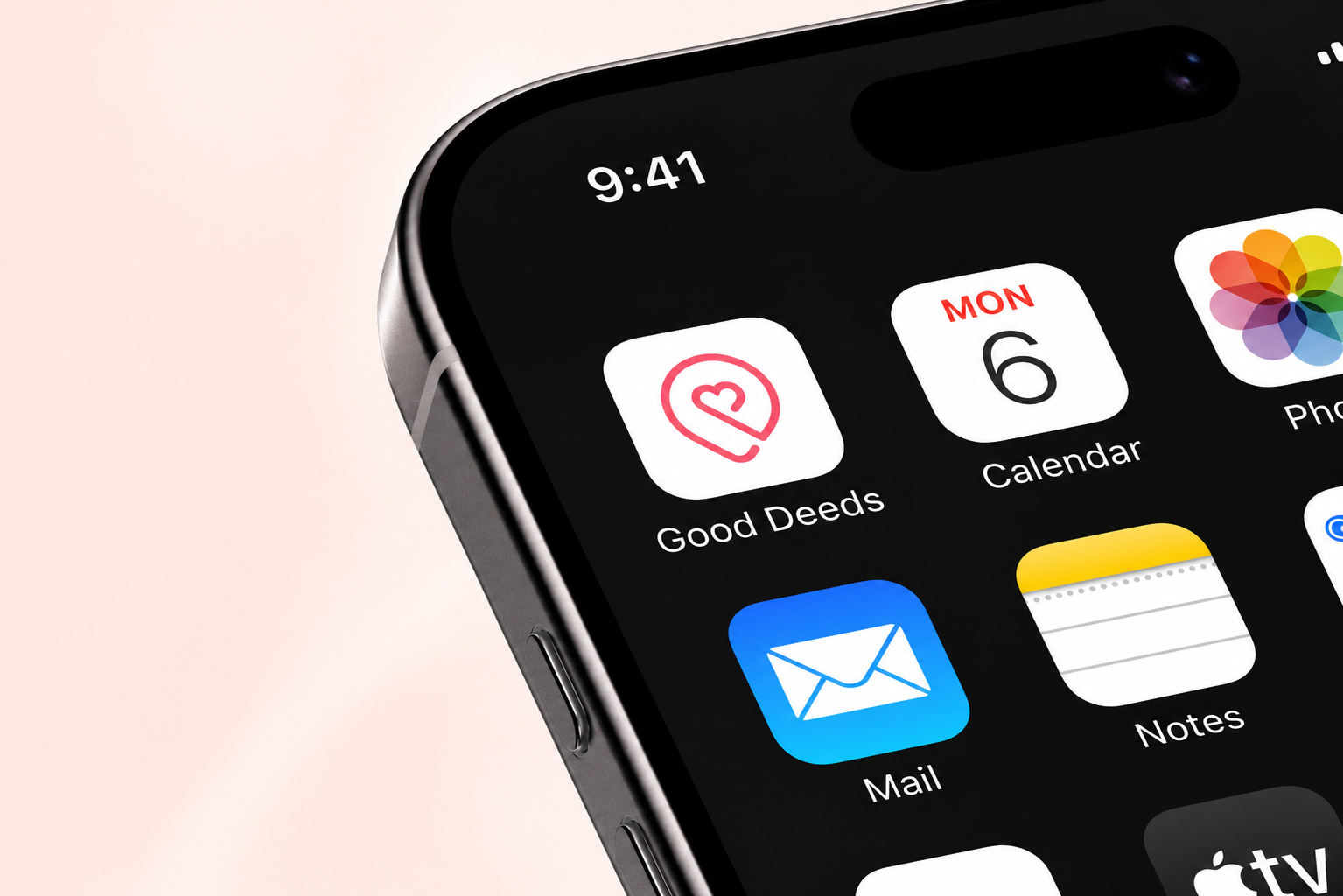
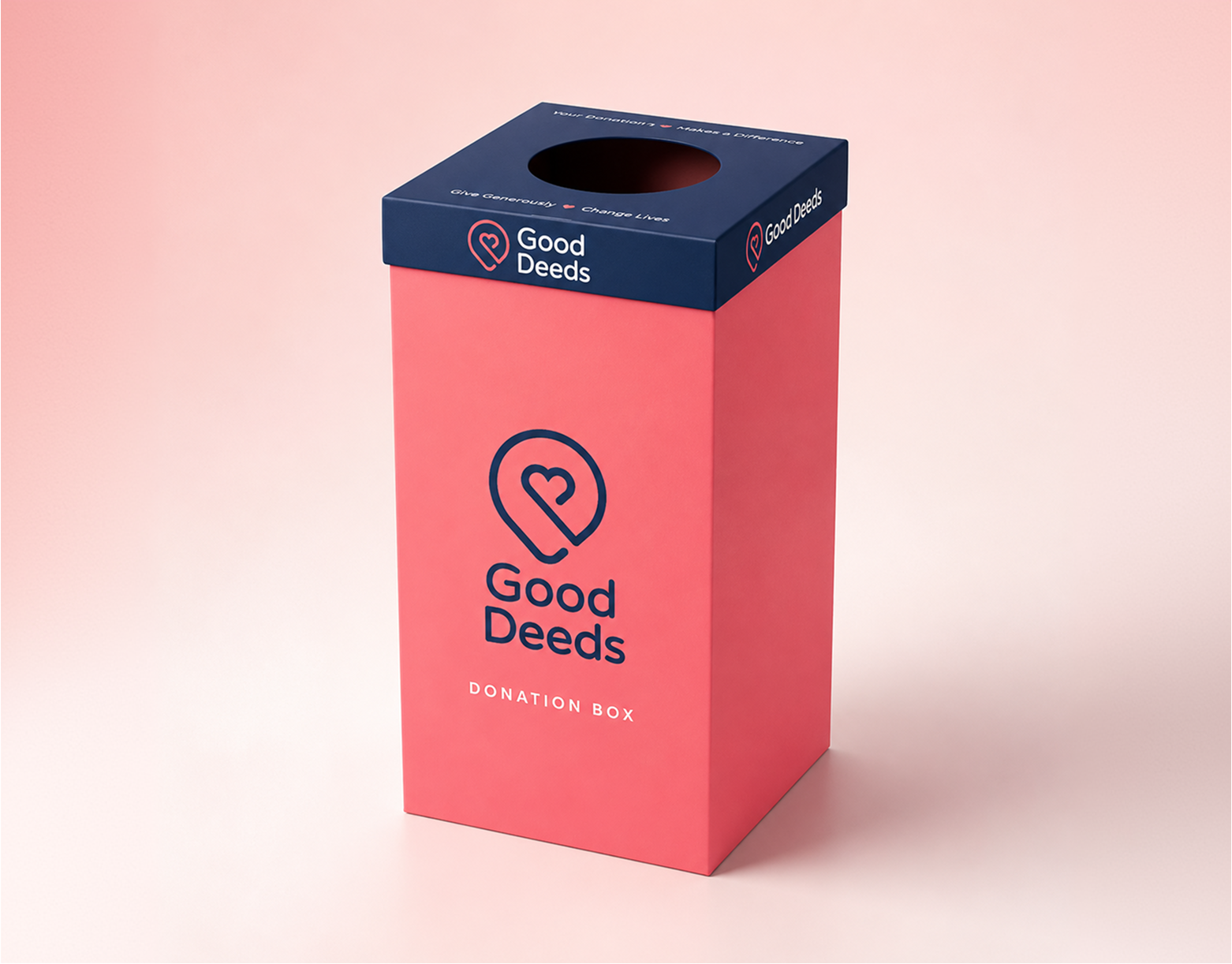
The mark combines a location pin with a heart, making the product's role visible: connecting the desire to give with a nearby destination. The identity stays warm, positive, and community-focused so the experience feels human before it feels like software.
Outcome
What the concept resolved, and what remains unproven
Good Deeds turned a broad problem into a tangible product flow. People can discover nearby drives as a list or map, understand what each campaign needs, and choose between visiting a collection point or following a guided “Donate now” path.
The concept has not been launched or tested with users, so these decisions are not validated outcomes. The research was also limited to 27 participants, most aged 20 to 29 and based in one region of Brazil.
- Design result. A clear path for finding where to give and understanding what happens next.
- Open risk. The 48% trust barrier still requires verified organizations and transparency about what has been collected.
- Next step. Usability testing with real donors and organizations to pressure-test the “Donate now” flow.
The main learning was that donation intent was never the core challenge. Reducing uncertainty was. The project also made clear that trust cannot be solved by interface copy alone; it needs product-level mechanisms.